


Our Czech-Slovak project has been assigned a BeZero Carbon ex ante Rating of A.pre with low execution risk as of 05/06/2026. This places the project in the top 30% of soil carbon projects worldwide.

Carbon is measured directly in soil samples at fixed GPS points over time. Models only extend those measurements across un-sampled fields, validated against ground truth.

At least 70% of what buyers pay flows to the farmers physically storing the carbon. No broker-style margins.

The GHG Protocol LSR Standard (from 2027) requires traceability back to the land. Our project is built on fixed GPS points, a static baseline and an on-chain record on the Regen Network registry — a unique ID and full audit trail, verifiable by anyone.

Each credit is backed by a 10-year crediting period and a further 10 years of monitoring — two decades of accountability for every tonne. On top of that, 20 % of all credits are held back in a buffer pool that covers any reversals, so the carbon stays accounted for even if conditions change.

Our farmers cut emissions too — less fertiliser, less petrol — but we don't credit that. Every Carboneg credit is carbon we've physically measured as removed and stored in soil, never an emission merely avoided.
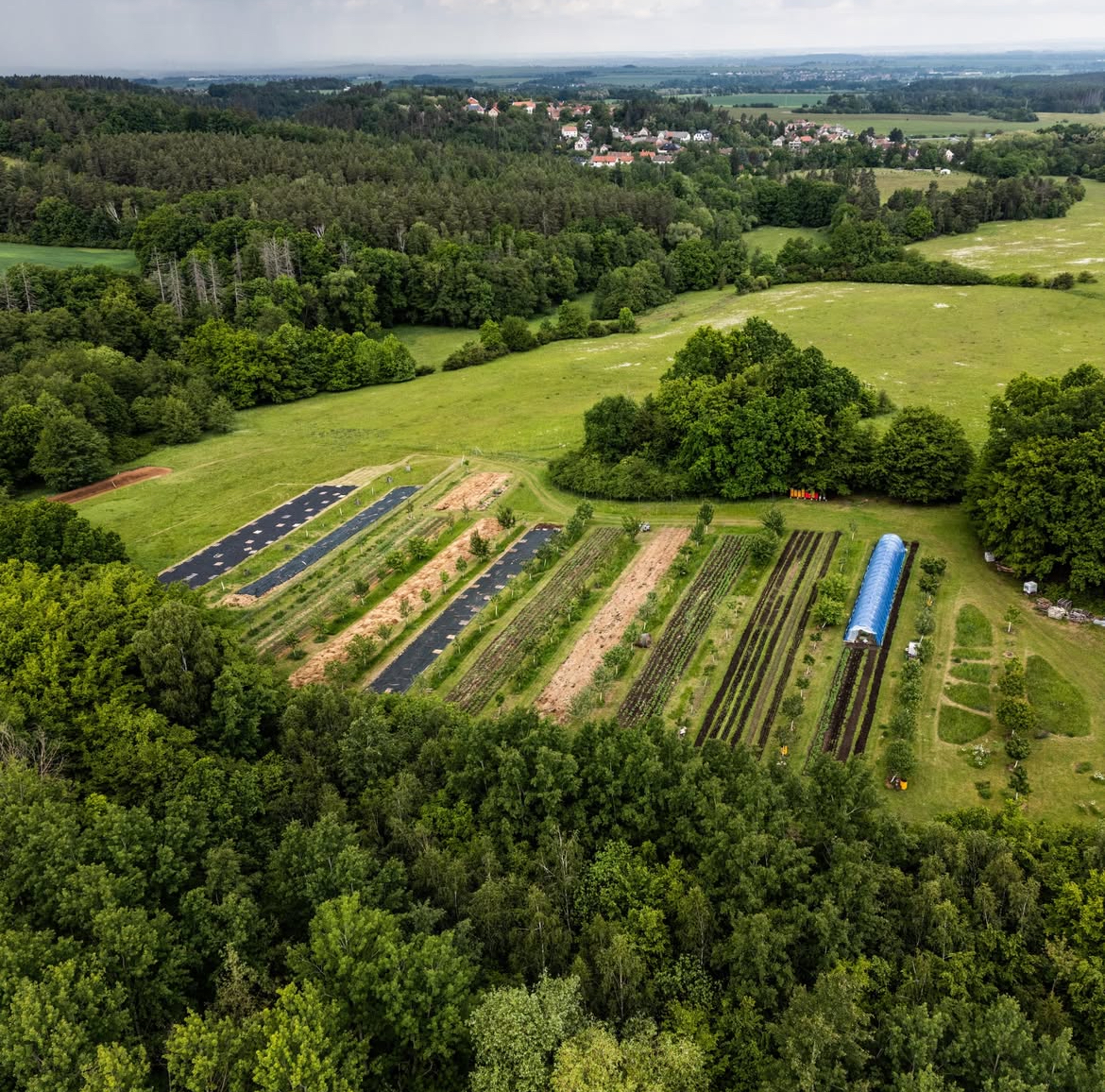

under regenerative management

making the soil healthier

total expected removal by 2027 (portfolio)
first certified credits (vintage Sept 2026)
We are present in Czechia, Slovakia, Ukraine, India, Kazakhstan, South Africa, Zambia, Zimbabwe, Chile. This translates to 4 continents - Europe · Asia · Africa & Latin America.


Fields stay green between cash crops. Living roots feed soil life and keep pumping carbon underground in months when bare fields would sit idle.

Reduced and no-till farming protects soil structure, so the carbon already stored is not oxidised back into the atmosphere.

Wider crop rotations, organic matter and integrated livestock feed the soil food web that converts plant carbon into humus.

Cutting agrochemical dependence lets fungal and microbial networks recover — the biology that locks carbon into soil aggregates.

A farmer enrols. Carboneg verifies their legal relationship to the land, reviews their agronomic history, and signs a 10-year regenerative management contract.

Before any intervention, we take soil samples at fixed GPS points inside the project area and an accredited laboratory analyses soil organic carbon and nitrogen. This fixes the static baseline.

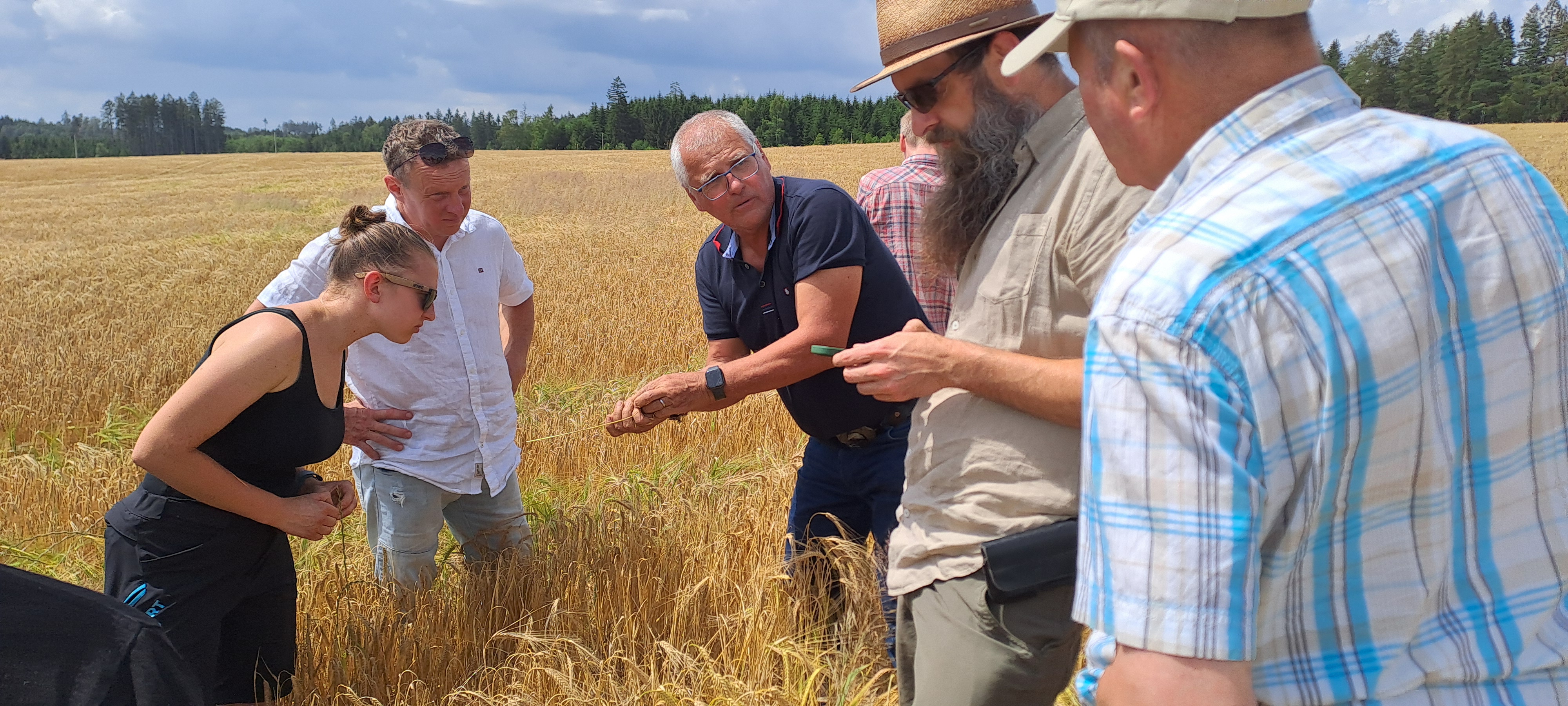
Regenerative farming is a skill, not a switch. We organise one-to-one consultations, field days, seminars and conferences, creating the know-how and supporting community that are essential for change to happen on the ground.

No-till, cover crops, mulching, wider crop diversity, reduced agrochemicals, rotational grazing — applied on real cropland and pastures, with our ongoing oversight.

We re-sample at the same GPS points every two years and measure the difference against the baseline — that's the tonne of CO₂ stored in soil. Physically, not by model.

Independent third-party verification, after which the credit is issued. 20 % of all issued credits goes into a buffer pool against reversal, and once credits are sold, 70 % of the revenue flows back to the farmer.

Verra and Gold Standard are larger. But their soil carbon methodologies are either not practically feasible in Europe (Verra VM0042 requires a dynamic baseline not workable in the EU), or sum modelled per-practice estimates instead of measuring the farm as a system. Regen Network’s C06 methodology measures the farm as a system — decisive for the kind of project we run. As a smaller registry, Regen Network is also significantly faster: a full validation and verification cycle takes months rather than years, and our farmers receive payment one to two years earlier.
The GHG Protocol Land Sector and Removals Standard (effective 1 January 2027) requires traceability throughout the full CO₂ removals pathway. Our project is built around exactly that principle. Every gram of carbon we credit is anchored in physical soil samples taken at fixed GPS calibration points inside the Project Area, against a static project-level baseline, with on-chain registry records that any third party can verify.
We see the CCP label as a methodology-level minimum threshold rather than an indicator of the quality of a specific project. We’ve focused instead on securing a strong, independent quality signal at project level: an ex ante ‘A’ rating from BeZero. If CCP becomes a firm requirement of a larger long-term contract, we remain open to pursuing the label as part of that engagement.
The contract with the farmer runs for 10 years (the crediting period), with registry rules extending the commitment to maintain practices for another 10 years (20 years total). On top of that, 20% of all issued credits goes into a buffer pool against reversal. Each monitoring round is compared against the baseline or the historical maximum SOC stock, whichever is greater — so carbon already credited cannot be re-credited if it is lost and regained.
Project design includes water-retention measures: cover cropping, mulching, rotational grazing. And because we measure every second year, credit issuance reflects what actually happens in the soil — not a modelled assumption.
Our credits are nature-based removals with 20-year permanence. They qualify under the SBTi Net-Zero Standard V2 (OER draft, 2025) and under CSRD ESRS E1 as a separate item alongside emission reductions. For GHG inventories they meet the LSR Standard’s traceability requirement. We provide a unified ESG documentation pack per credit.
Yes. For forward contracts above 5,000 tonnes per year we discuss geographic exclusivity (for example, credits sourced exclusively from Czech farms) or exclusivity on a vintage period.
Tell us what you’re looking for and we’ll get back to you.


